
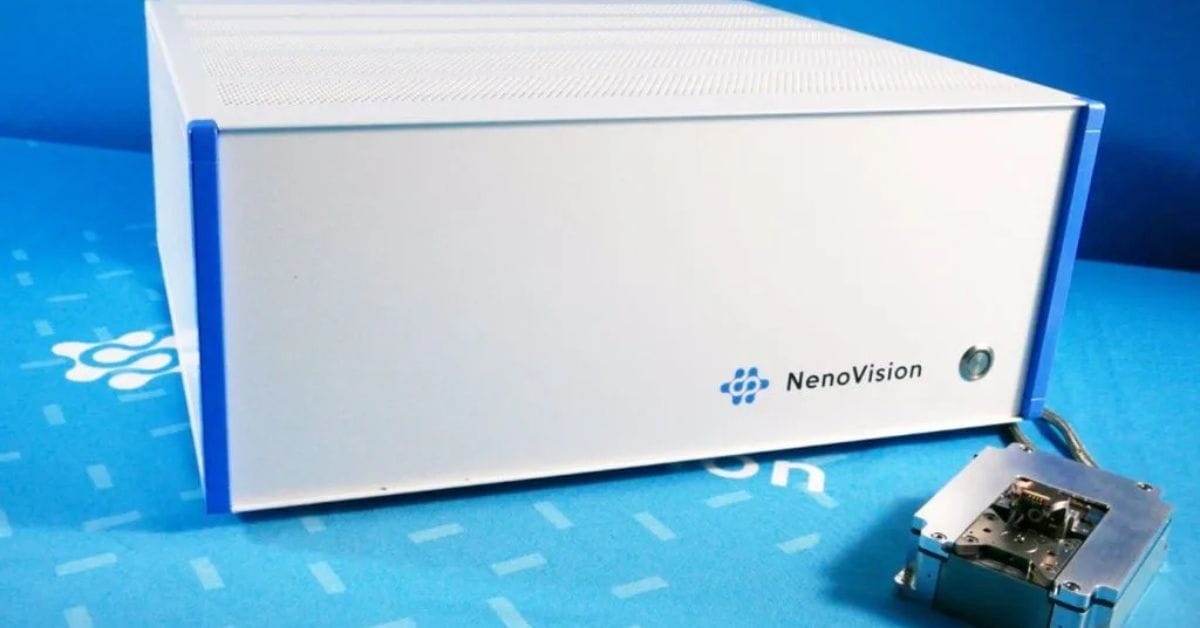
This publication presents a novel electrical atomic force microscopy technique—Electron-Beam Excited Conductive AFM (EBC-AFM)—that introduces a fundamentally new approach to electrical characterization and failure analysis of advanced materials. In this method, a low-energy electron beam is used to inject charge directly into the material, while local conductivity is mapped using standard conductive AFM (c-AFM). By replacing the conventional physical back contact with electron-beam-induced charge injection, EBC-AFM eliminates one of the most significant limitations of traditional c-AFM techniques.
The removal of the back-contact requirement is particularly important for modern semiconductor technologies, where failure analysis teams increasingly face Silicon-on-Insulator (SOI)-based device architectures. In such structures, establishing a reliable back contact is often impossible or would require invasive and time-consuming sample preparation. EBC-AFM overcomes this challenge by enabling fully contact-free electrical measurements, allowing conductivity mapping even on electrically isolated layers, isolated flakes, and non-continuous films.
Beyond its relevance for failure analysis, the technique is fully compatible with wafer-scale measurements and in-line process flows. The study demonstrates that EBC-AFM achieves sensitivity and spatial resolution comparable to conventional c-AFM, while significantly expanding its applicability to advanced material systems and fully processed device structures. As such, EBC-AFM provides a powerful and practical pathway toward next-generation electrical metrology for both research and industrial semiconductor environments.
